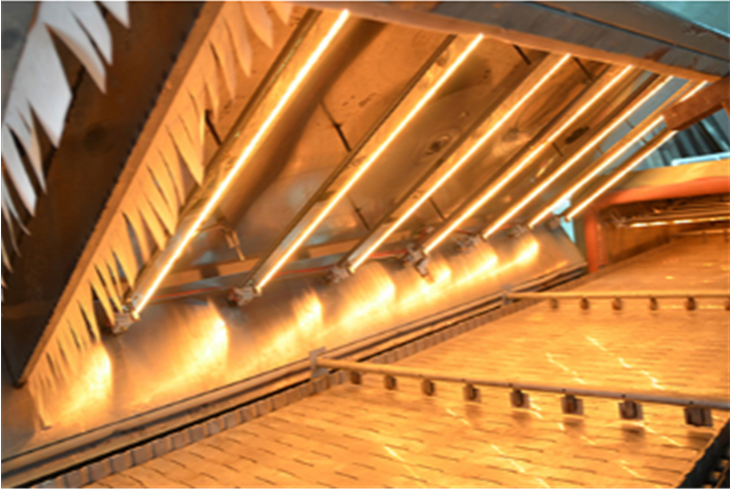
Getting Your Sterilization Cabinets Up to Temp—Fast
In a busy commercial kitchen, waiting around for an oven or a sterilization cabinet to warm up is a nightmare. You don’t have minutes to spare; you need those target temperatures in seconds. That’s why we don’t rely on the old-school resistive coils that just slowly heat up the air. Instead, we use short-wave infrared (IR) emitters. Think of it like the sun hitting your skin on a hot day—the energy jumps straight to the surface of the dishes or utensils. No middleman. Just instant heat.
How we make it happen
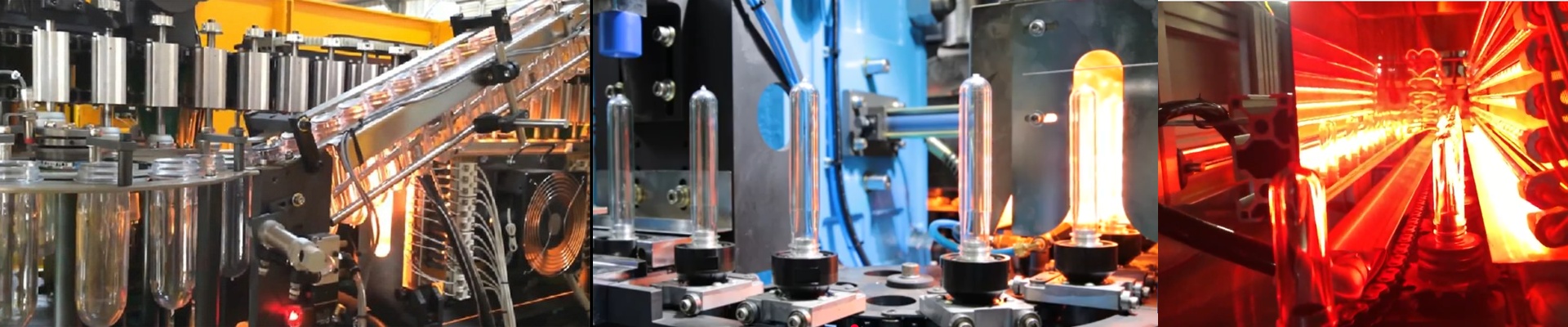
To get that “instant-on” feel, we go with halogen-filled quartz tubes. Here’s the secret: the halogen cycle stops the tungsten filament from evaporating too quickly. This lets us push the lamp to much higher temperatures without the element just giving up and burning out. It creates a massive amount of heat in a very small footprint. The second you flip the switch, the filament hits its peak. You get this immediate surge of infrared energy that kicks a cabinet from room temperature to a germ-killing heat zone almost before you can blink.
The nuts and bolts
We use quartz glass for the outer shell because it’s basically invisible to short-wave radiation—it lets the heat pass right through without soaking it up. For the wiring, we usually stick with R7s or Sk15 connectors. They’re sturdy, they don’t rattle loose, and they just work. And if you’re working with tricky materials that don’t absorb heat easily? We can add a thin-film coating to the quartz. It tweaks the wavelength so the heat actually “sticks” to your specific target surface instead of bouncing off.
A few things to watch out for
Now, there’s a catch. When you’re pumping this much energy into a small space, things get hot. Fast. You’ve got to make sure your cabinet housing can actually handle that kind of thermal load. If you skimp on the insulation or forget to protect the surrounding electronics, that ambient heat will eat your control boards for breakfast. My advice? Use a PID controller. It keeps things steady and stops the temperature from overshooting the mark once you’ve hit your goal.