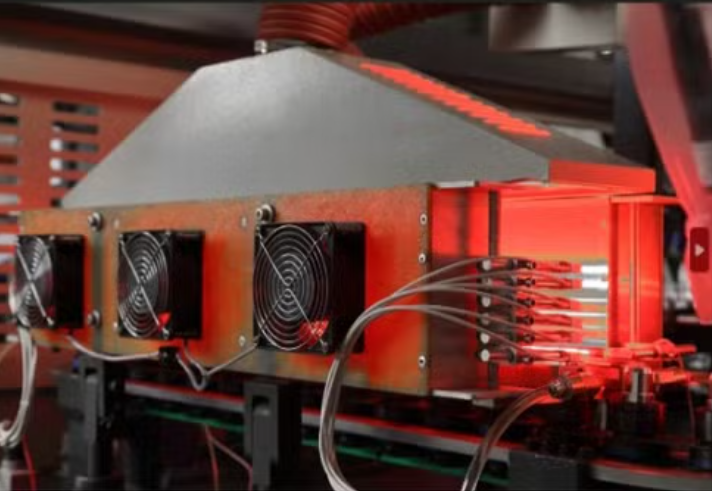
PC Preform Softening Lamps: Built for KHS Blow Molding—No Guesswork, Just Heat You Can Count On
If you’re running a KHS blow molding line, you know the drill. One minute you’ve got clean, solid bottles. The next, you’re staring at scrap—ovals, stress lines, the whole mess. It usually comes down to heat. We built these PC preform softening lamps for engineers who are tired of playing guessing games with their heat control. They’re designed to drop right into your existing setup and deliver repeatable, even softening. The kind that keeps your line running smooth and your scrap rate low.
Power, Voltage, and Fit: It All Has to Line Up
Here’s the thing about these lamps—they aren’t just about getting hot. They’re about getting hot right. We size the wattage to match the actual thermal load your preforms need. That means it heats up fast, but doesn’t overwork the system. The voltage is chosen to match what’s already in your control cabinet—400V is common—so you’re not rewiring half the machine just to make it fit. And the length? It’s matched to your preform path and the heater block footprint. That’s how you get even radiant energy across the whole softening zone. No hot spots. No weak spots. Just stable, consistent heat.
What’s Inside: The Details That Keep You Running
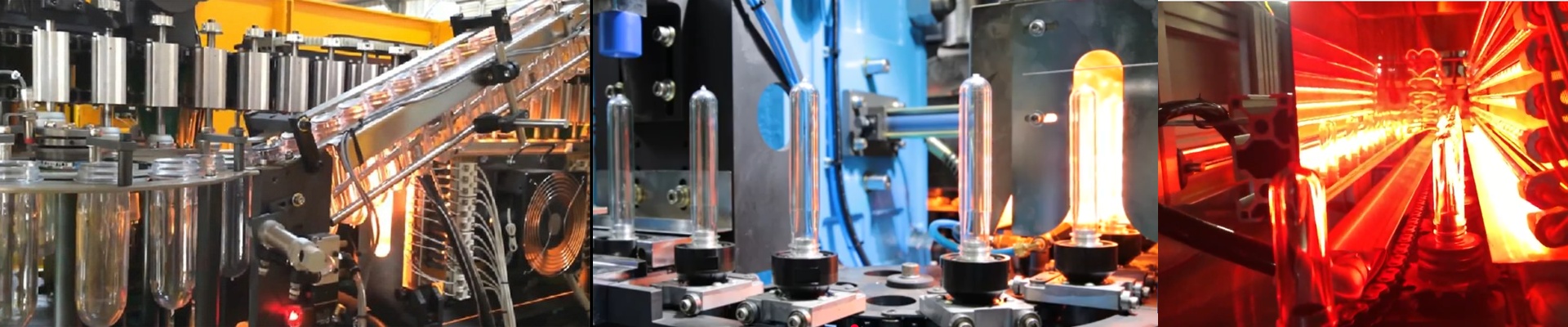
Inside each lamp, a halogen element sits inside a quartz tube. This combo gives you high heat density and a lightning-fast ramp-up. The internal reflector coating helps shape the heat field, so you’re not wasting energy and you get better uniformity across the preform neck and body. Mechanical reliability matters, too. That’s why we use R7s-type connectors. They handle the current cleanly and create a secure electrical joint that stays solid over time. No resistance drift. No intermittent faults that shut you down mid-run.
Why It Works on the KHS Line
On a KHS blow molding cell, the lamp’s job is simple: deliver repeatable softening so the blow pin can do its work cleanly. The thermal profile is tuned to keep the preform in the right temperature band, shot after shot. Installation is straightforward. Spec the right length and connector, and it drops in with minimal rework. But wait—there’s a trade-off. The high heat density gives you fast softening, but your machine’s cooling and airflow need to be properly spec’d to handle the ambient heat buildup. If your KHS machine struggles with heating uniformity, this is the practical fix. Matching the lamp to the machine’s thermal architecture—that’s how you get back to smooth, predictable runs.