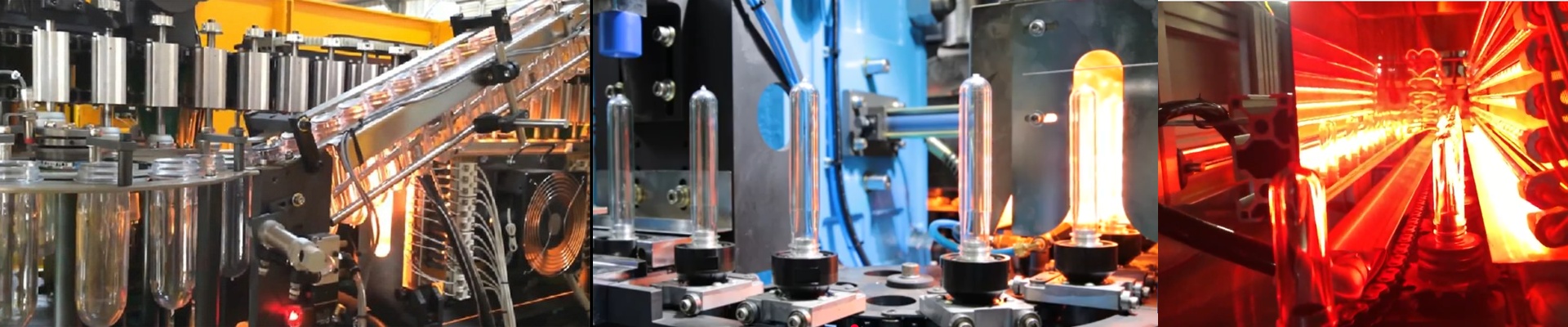
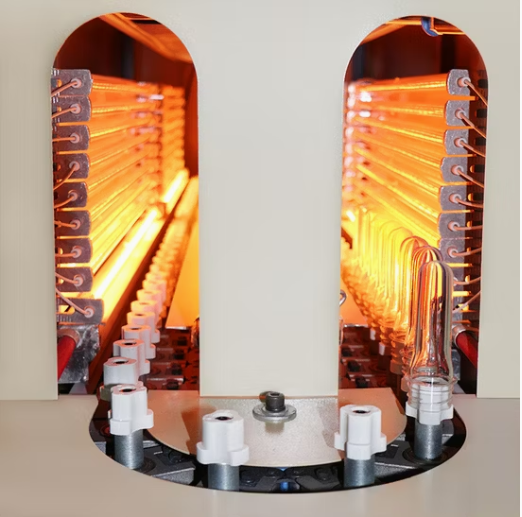
On the floor, a Contiform blow molder doesn’t sit around waiting for a weak lamp to recover. When the heating tunnel starts drifting, preform necks get stressed, wall thickness goes off-spec, and you lose shots per minute. That’s why the replacement lamp for a Krones Contiform has to be engineered for the machine—not just the socket. What matters technically We build the emitter to match the Contiform heating profile: short-wave infrared, quartz envelope, and a stable spectral output that heats preforms fast without scorching. It runs at the OEM-rated voltage and power, with an R7s connector and the exact overall length so it fits the reflector geometry. Focus stays consistent across the tunnel, so you get even temperature distribution from neck to base. The filament design and end-seal construction are matched to the Contiform’s thermal load, which keeps current draw steady and cuts down hot spots. Why it works here Drop this lamp in and the heating window settles. You get repeatable stretch ratios and consistent bottle weight, which means less scrap and cycle time that stays where it should. Energy use drops because the emitter delivers heat on-demand with minimal warm-up lag, and service intervals stretch thanks to a rated life that holds up in high-cycle stretch blow molding. The upshot is uptime you can actually plan around, and fewer lamp changes during peak runs. Here are the practical details Install the lamp in a cool machine, double-check orientation and reflector condition, and confirm the voltage matches the label. Handle it by the base only—quartz is tough, but fingerprints on the tube will cause hot spots. If your Contiform runs heavy black or dark preforms, verify the power density with your controls. Dark materials absorb more IR and can push the tunnel temperature higher. Plan replacements during scheduled stops, not when you’re scrambling.