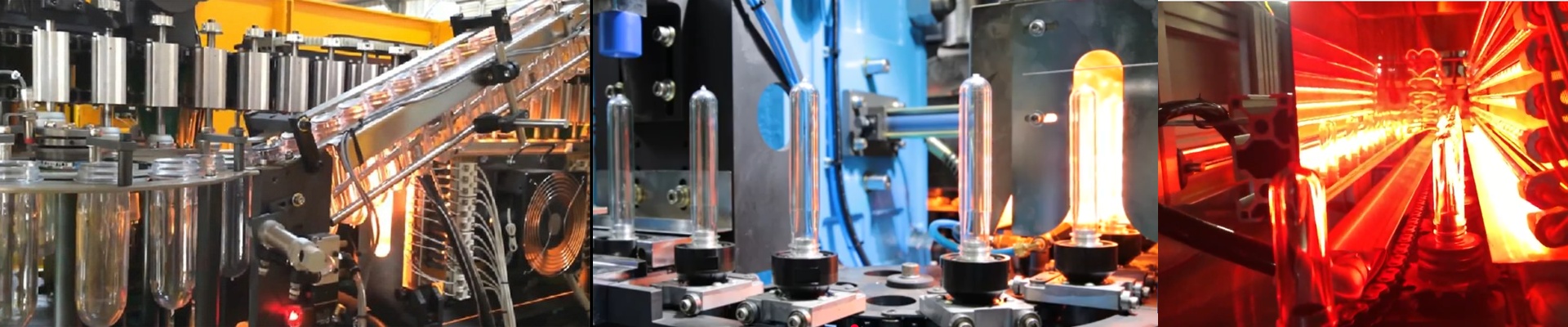
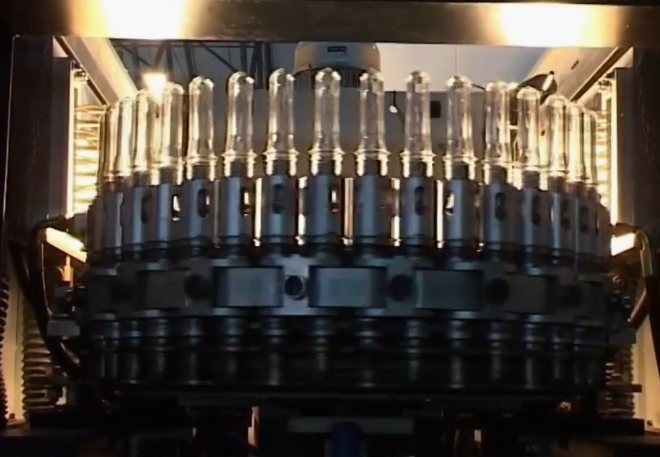
On the blow molding line, uneven preform heating quietly steals yield. You see it in off-spec bottles—thin walls, stress whitening, top load that drifts. When the heating tunnel underperforms, you end up chasing temperature swings, stretching cycle time, and wasting material. The PC preform infrared heating module 3000W is built to cut that variability at the source.
What matters technically
This module runs short-wave infrared emitters in a 3000W package, matched to how PET preforms crystallize. Quartz envelopes give you fast response and stable output across the heating zone, and a focused reflector profile concentrates energy where preforms need it most—shoulder to neck. The design hits OEM tolerances for mounting and electrical interface, including standard R7s connectors and dimensions that fit common blow molder tunnels. Output density is tuned for rapid, repeatable heating without scorching the surface, and emitter life is rated for sustained duty cycles in continuous stretch blow molding.
Why it works in the real world
Drop it into your blow molding machine and it restores the heating profile the original OEM intended. Preforms hit setpoint faster, so you can run shorter heating windows and tighten timing. That means more stable cycle times, fewer rejects from uneven stretch, and less scrap from thermal shock. Energy use drops because the emitters cycle quickly, cutting idle draw in the heating tunnel. On Sidel, Krones, SIPA, Husky, SACMI, or Nissei ASB machines, you get predictable performance—less drift, fewer adjustments, and bottle geometry that stays consistent.
Things to know
Match the module to your machine’s voltage and mounting layout before ordering; not every tunnel accepts the same footprint or lead routing. Expect a short commissioning period to dial power distribution across zones for your preform weight and color. The surface runs hot during operation—keep clearances and make sure shielding is in place. With the setup dialed, you can run thousands of hours before output decay shows up, and routine cleaning of reflectors keeps the heat profile honest.