Why getting the details right on your Sidel Matrix actually matters
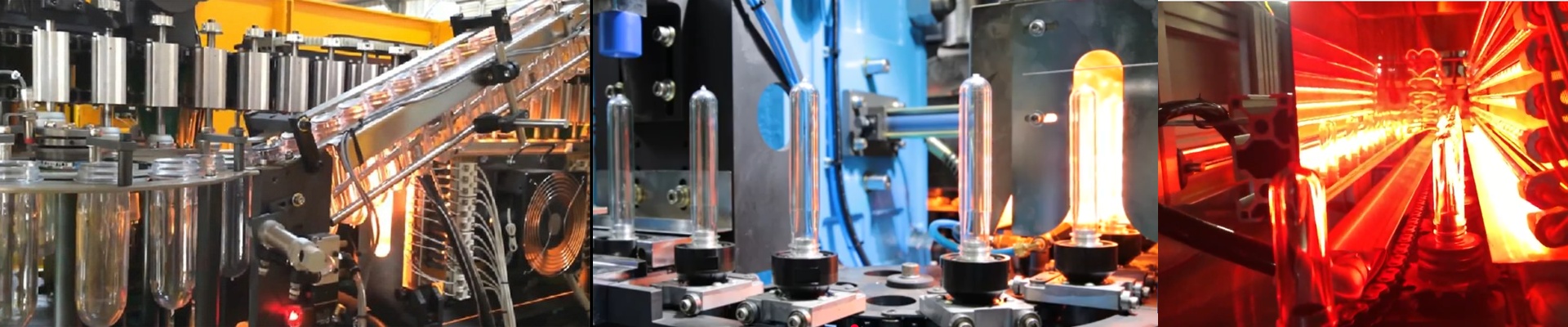
When we build a PET infrared lamp, we don’t just copy what someone else is doing. We dig into how your Sidel Matrix actually behaves—electrically and thermally—so the replacement acts like the original. That way, you don’t have to retune the whole machine just to get back to normal. We match the original’s power density and how it responds to heat. Wattage, voltage, length—everything is chosen to recreate the same heat curve across the PET preform. Because if that curve shifts, you start seeing uneven stretch, weak necks, or crystallization. Keep the curve consistent, and the process stays steady.
The practical stuff: power, voltage, and physical fit
The heating zone on a PET line needs a lot of heat in a small space. Our lamps deliver that with a high-wattage, 400V design packed into a standard tube length. The physics are pretty straightforward: at a given wattage, higher voltage means lower current. Lower current means less loss in the wiring and a cooler run along the line. But there’s a trade-off. High power density means the lamp runs hot, and that heat has to be managed by the reflector and the machine enclosure around it. If your cooling and airflow aren’t up to the job, the lamp won’t last as long. We design the lamp to handle the heat load, but the machine still needs routine care.
What’s inside—and why the connector matters
We use halogen-filled quartz tubes because they can run at very high filament temperatures, which produces short-wave infrared. PET absorbs short-wave IR quickly, so you get fast, surface-level heating that stays in sync with the blow-molding timing window. And the halogen cycle helps keep the filament stable, so output stays consistent over time. The connector isn’t an afterthought. We spec an R7s or Sk15 base because it fits the Sidel Matrix socket, locks in securely, and carries the required current without getting hot at the contacts. These are built for repeated swaps on the line. If the lamp doesn’t seat right, you can end up with arcing and uneven heating.
The payoff: plug it in and keep running
On a Sidel Matrix, the lamp is part of a closed-loop thermal system. Our PET IR lamps are engineered to plug in, power up, and deliver the same temperature curve as the original. The result is faster changeovers, fewer rejects, and maintenance you can plan around. These are built for the shop floor: tough quartz, stable output, and connectors that survive daily replacement. They spec out right, wire up fast, and keep your PET line moving. One honest reality check: high-density IR heating works best when reflectors are clean and airflow is proper. Keep those in shape, and the lamp will perform exactly the way it was designed to.